Makeup
Eyeshadow creasing: the three factors and the fixes
Eyeshadow wear comes down to lid oil, base choice and setting powder — three factors with separate fixes, and a crease only forms when all three go wrong.
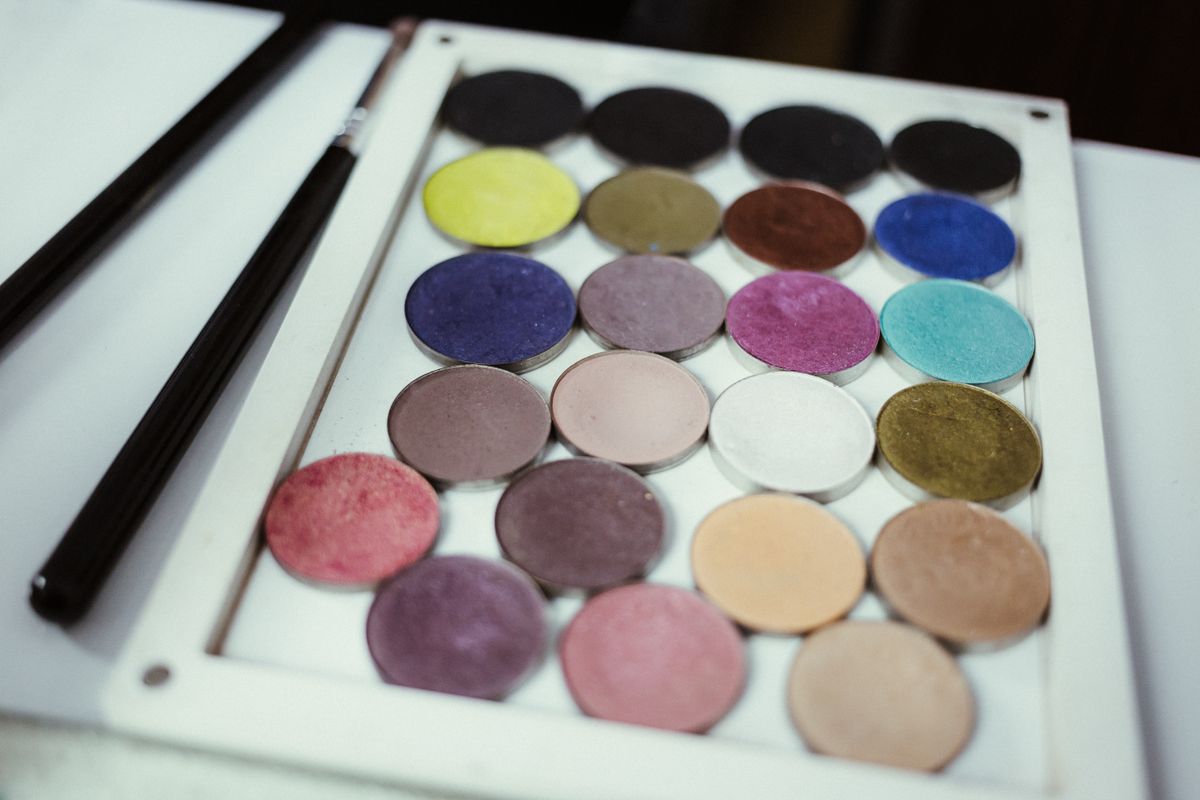
Eyeshadow that fades into the lid fold by afternoon is usually blamed on the shadow, but the pigment is rarely the problem. A crease is the end point of a small chemistry failure with three inputs — how much oil the eyelid produces, what sits between the skin and the shadow, and whether the stack was locked down. Each input has its own fix, and a crease only forms when all three go unanswered.
Lid oil is the solvent
Powder eyeshadow holds its color through a binder — a small amount of silicone or ester that presses the pigment onto whatever surface it touches. Eyelid skin produces sebum like the rest of the face, and sebum dissolves that binder. On oily lids the solvent is generated on site, all day, which is why oily lids can crease a premium shadow by noon while the same shade lasts on a dry lid. This is also the factor that decides everything downstream: the more oil, the more each later step has to compensate, and the less a “long-wearing” label on the shadow itself can help.
The base layer sets the ceiling
A dedicated eye primer is an engineered surface: a thin silicone-polymer film with grip, formulated to stay put under oil. Concealer as a base trades grip for brightness — it evens the lid and cancels discoloration, but it carries the same emollients that make it blend on skin, so unset it creases on its own and takes pigment into the fold. Foundation alone is the weakest base: whatever the face formula offers in flexibility, it was not built to hold powder against sebum. The honest ranking runs primer for wear, concealer for a corrected canvas, foundation for emergencies — and the first two are combinable, primer over concealer, if the lid needs both.
Setting locks the film
Whichever base is on, powder is what converts it from a cream to a surface. A press of translucent or skin-tone powder absorbs the free emollients in the base and gives the shadow a dry bed to land on — the same logic as setting any cream product. Skipped, the base stays mobile and the shadow migrates with it; applied, the stack behaves like one dry layer. On oily lids the powder press matters as much as the primer, because it is the step that slows the sebum working up through the film.
The crease mechanism and the routine
A crease is pigment that migrated. Once oil emulsifies the binder, the freed pigment travels — and gravity plus blinking collect it in the lid fold, where it concentrates into a line. The counter-routine follows from the mechanism: prime thin, never in a thick layer; set the base with a pressed powder before any shadow goes on; apply shadow dry and build it while everything underneath is still matte. Midday touch-ups should be powder pressed in, not more cream. If the lid has gotten oily enough to shine, blot before adding anything — the same discipline that governs the T-zone in the long-wear foundation comparison. It is also the reason shade and wear decisions belong to skin type first. For how often the products in the stack should be replaced, see the PAO guide; for placing color on the face, see the makeup hub.
Frequently asked
- Can concealer be used as eyeshadow primer?
- Yes, if you set it with powder first. Concealer carries the same emollients that make it blend on skin, and unset it will crease on its own — then drag pigment into the crease with it. A thin layer, pressed powder over it, and it behaves close to a dedicated primer.
- Why does my eyeshadow crease even with primer?
- Usually one of three things: the primer layer is too thick, the primer was never set with powder, or the shadow went on over another creamy product that was still fresh. Oily lids need primer applied thin, set with powder, and loaded with shadow while everything is dry.
- Do dry eyelids need eyeshadow primer?
- Not for oil control, but often for grip. Dry lids rarely crease from sebum, yet powder can fade and go patchy on them by afternoon because there is nothing for the binder to hold. A light primer evens the canvas and gives the pigment something to bond to.