Makeup
Foundation shade testing: jawline, daylight, and the 15-minute wait
Why jawline swatches beat hand swatches, what daylight and a 15-minute oxidation wait reveal, and why one brand's number never transfers to another's chart.
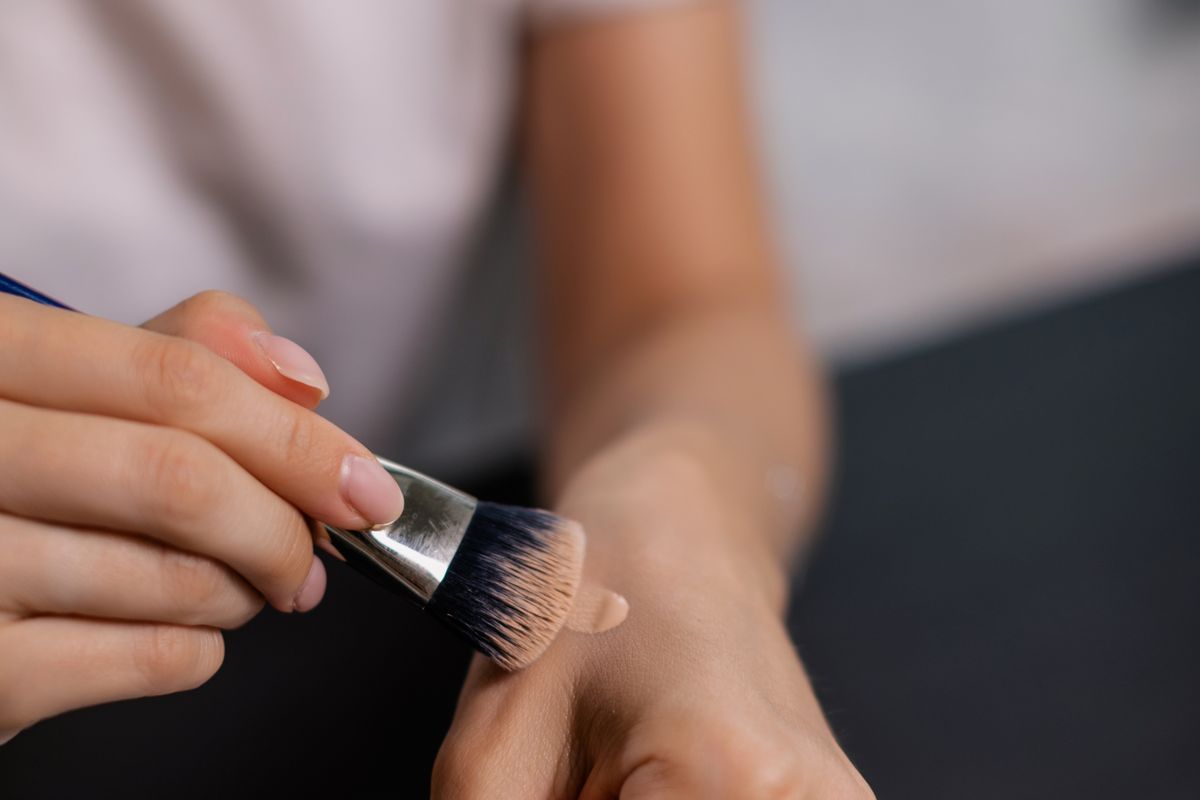
Shade matching fails for boring reasons: the swatch lands on the wrong skin, the light lies, and the verdict comes too early. None of the fixes cost anything; they are all about where the stripe goes and how long you wait before judging it.
The jawline, not the hand
The back of the hand is the worst available test surface. Hands get a different amount of sun than faces, the skin is thinner and often redder or darker, and nobody wears foundation on the back of a hand anyway. The informative spot is the jawline or the side of the face just below it — close enough to the cheek to show the match and close enough to the neck to show whether the shade bridges the two. Swipe three candidates in parallel stripes and compare them to each other; a single stripe has nothing honest to sit next to.
Daylight, and the fifteen-minute wait
Store and bathroom lighting both distort. Warm bulbs cancel pink and orange, cool white light grays everything out, and counters are lit to flatter whatever is on display. The check that counts happens near a window in actual daylight.
Then wait. Most foundations oxidize to some degree: the oils in the formula and on the skin interact, and the shade can shift darker or warmer over the first minutes of wear. A stripe judged at one minute is a stripe at its most flattering. Fifteen minutes is the usual working window — if it still matches after that, it will match at hour three.
The number means nothing across brands
Shade numbering is a private language per brand. A 30 in one range can be deeper, cooler, or pinker than a 30 in another, and the undertone letters — N, C, W, and whatever else brands invent — do not align either. A brand’s own chart is internally consistent; across brands, only the actual pigment comparison means anything.
That is also why the familiar undertone shortcuts are approximate at best. The vein and jewelry tests guess at undertone, but undertone and the wrist test is a separate question from depth, and the shade chart of the line you are buying is the only number system that matters for it.
When the face and neck disagree
Ideally the face and neck match. In practice they often do not — the neck is usually a step lighter because it sees less sun and less product. Matching the foundation to the neck makes the face look washed; matching it to the face makes a visible line at the jaw.
The working compromise: match primarily to the face, because the face is what the foundation is correcting, then blend down through the jaw so the transition softens. If the gap is genuinely large, split the difference at the jawline, and let bronzer, contour, and blush placement pull the perimeter back toward the neck. Pairing the shade with the right finish for your skin type matters as much as the depth does — a perfect number in the wrong finish still reads wrong.
Three stripes at the jaw, a window, a quarter hour, and the brand’s own chart read honestly — that is the entire method, and it is free.
Frequently asked
- Can you test foundation on your hand?
- You can, and it will mislead you. The back of the hand gets different sun, different redness, and different texture than the face, so the stripe never reads the way it will wear. The jawline, in daylight, next to at least one other candidate stripe, is the only placement that predicts.
- Why does foundation oxidize and turn darker?
- The formula's oils interact with the skin's own sebum and with air, and some pigment systems shift warmer or deeper during the first minutes of wear. Judging a swatch at one minute catches it before the shift. Fifteen minutes is the usual window before deciding.
- What if my face and neck are different colors?
- Match to the face, since that is what the product is correcting, and blend through the jaw to soften the transition. For a large gap, split the difference at the jawline and use warmth products on the perimeter. A hard line at the jaw is a placement problem more than a shade problem.