Body & Bath
Hand cream by job: urea, glycerin, lanolin and silicone, mapped
Urea softens, glycerin draws water, lanolin seals and dimethicone smooths — the four jobs in a hand cream, plus the reapply logic for frequent handwashers.
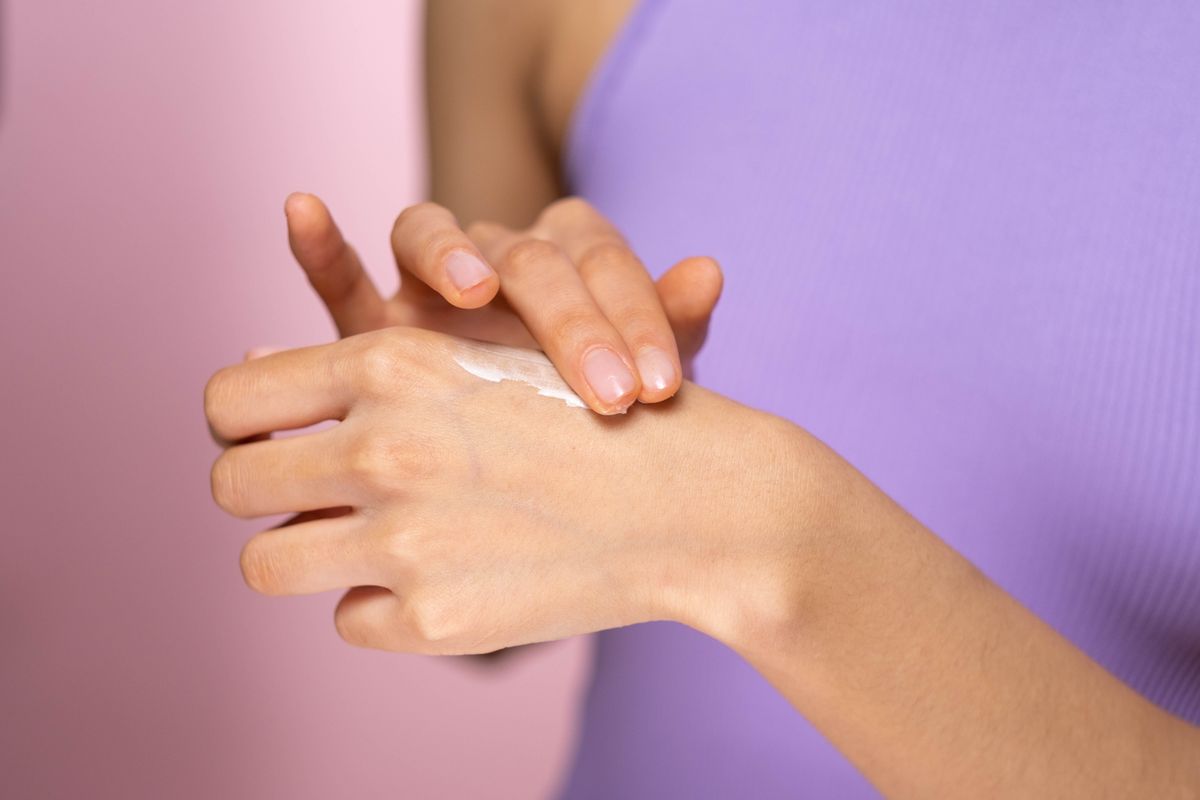
Hands take the worst treatment in skincare: dozens of washes a day, alcohol sanitizer, cold air, and almost no sebaceous armor of their own to begin with. The hand cream shelf answers with a noisy list of botanicals, but the work gets done by four quiet categories with separate jobs. Reading a label as a job assignment is the fastest way to stop buying the wrong tube.
The four jobs on the label
Urea does double duty no other single ingredient matches: at everyday strengths it holds water, and from roughly 10% up it turns keratolytic, softening thickened, callused skin — the reason the classic pharmacist-recommended hand creams lead with it. Glycerin is the pure humectant, pulling water into the upper skin layers; cheap, well studied, and in nearly everything. Lanolin is the occlusive — a lipid film close in spirit to skin’s own, best at sealing cracked, fissured skin that humectants alone cannot fix; plain petrolatum plays the same role for less. Dimethicone and its silicone relatives handle the transient job: instant slip, a light protective film, and a finish that lets you touch paper thirty seconds later. Daytime tubes lean silicone; rescue tubes lean urea and lanolin. Most honest tubes combine two or three of the four — the ratio, not any single name, is what separates a desk lotion from a repair cream.
Frequent handwashing: the reapply arithmetic
For healthcare workers, parents of small children and anyone in a sanitizer-heavy season, the honest model is this: handwashing strips lipids, and it also strips the cream you applied an hour ago. Protection is therefore a reapplication race, not a product-strength contest — the dermatology advice given to clinical staff, whose hands take the worst of it, is emollient after every wash, not one heroic morning layer. Practical version: small tubes at every sink, an ointment-base option reserved for cracks, and the recognition that occlusion physics, not exotic actives, is doing the repair.
The overnight paste
The thick-layer-plus-cotton-gloves routine sounds like folklore but is pure mechanism. A heavy emollient layer under breathable cotton stays on the skin for eight uninterrupted hours, cuts evaporative water loss, and softens the keratin that daytime urea then keeps in check. Cotton matters because it keeps the film where you put it — on the hands, off the sheets — without sealing in sweat the way synthetics can. One or two nights a week is enough for maintenance; cracked winter skin justifies nightly use until it heals.
A shortlist by need
Everyday dryness: a glycerin-rich lotion with a little urea, reapplied often. Rough, callused or flaking: 10%+ urea. Cracked and fissured: lanolin or an ointment, worn overnight under gloves. Office daytime: a dimethicone-led tube that will not mark your keyboard. None of the four jobs requires a luxury price — the ingredient list tells you everything, a discipline that runs through all of our body care guides.
Frequently asked
- What percentage of urea should a hand cream have?
- Around 5-10% for everyday dryness, and closer to 10-20% when calluses and cracked heels territory is involved — urea is keratolytic at higher strengths, meaning it softens and sheds thickened keratin. Below about 5% it acts mainly as a humectant. Start low, because higher-strength urea can sting fissures on first contact.
- Why do my hands get worse in winter even with cream?
- Cold outdoor air holds little moisture, and indoor heating dries it further, so the environment pulls water from skin all day. Meanwhile each wash removes part of whatever cream you applied. The fix is arithmetic, not a stronger tube: reapply after every wash, switch to gentler hand soap, and run a humidifier where you sleep.
- Do cotton gloves over night cream really help?
- Yes, for unglamorous physical reasons. The glove slows evaporation of both water and cream, keeps the thick layer off bedding, and gently warms the occlusive film so it stays workable longer. Overnight is hours of uninterrupted contact — the longest window most hands ever get with a moisturizer — so the same cream simply works longer.