Skincare
LED masks: the wavelengths are published, the dose is the catch
Red 630-660nm and blue 415nm light have published studies behind them. The wavelength science is real; the dose a home mask delivers rarely matches the trials.
LED masks are built on real photobiomodulation research, and the marketing leans on that research honestly — as far as wavelengths go. The catch is a unit most shoppers never see: energy density. The wavelengths on the box are published science; the dose a home mask delivers is a different, smaller story. Both halves matter before spending three figures on a face-shaped light panel.
The wavelengths with published numbers
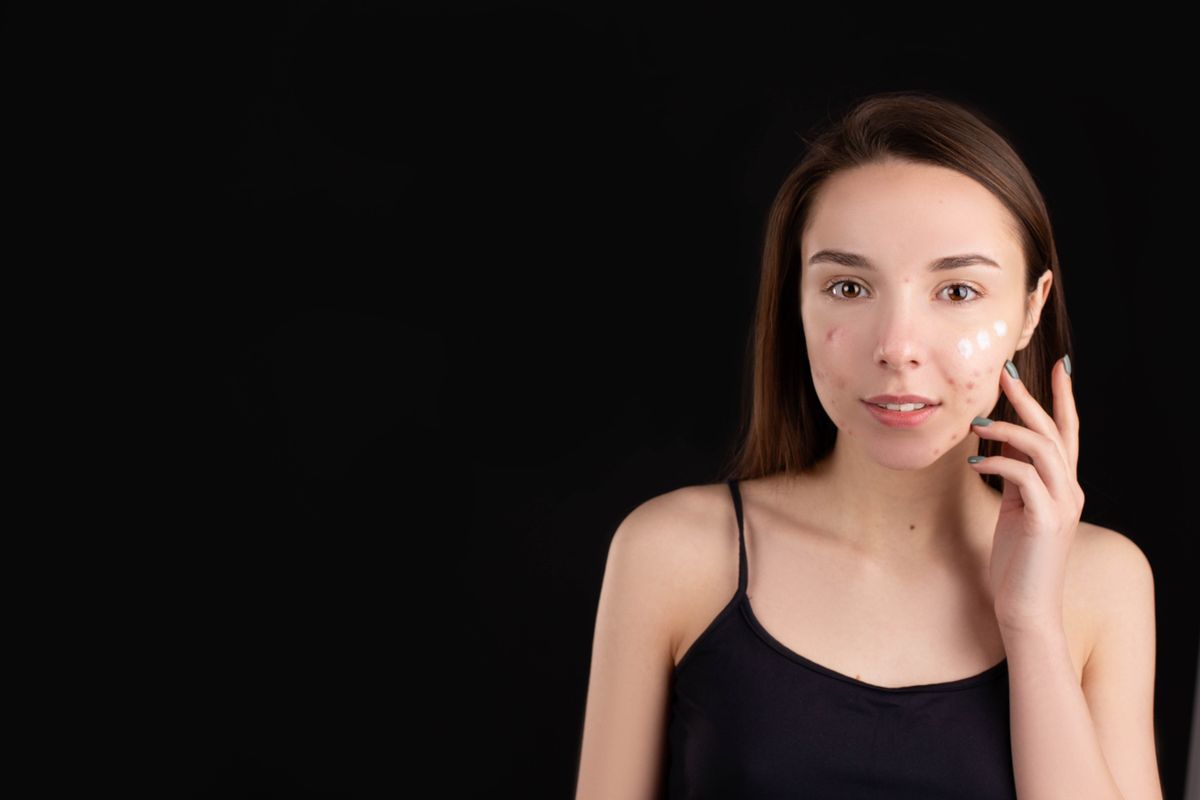
Red light in the 630-660nm band is the most-studied visible wavelength for skin. The published work points in two directions — collagen stimulation and reduced inflammation — with near-infrared around 830nm frequently paired into the same trials. Blue light near 415nm works differently: porphyrins produced by Cutibacterium acnes absorb it and generate reactive oxygen species that thin the bacteria population involved in acne.
Yellow and green light have the thinnest published records and the boldest marketing. None of the real numbers here are secret or proprietary — they come from decades of low-level light therapy literature, and mask companies quoting 660nm or 415nm are quoting genuine science. The question worth asking is what happens after the quotation: whether the device delivers anything like the conditions those studies created.
The dose gap between masks and clinical units
Published photobiomodulation trials for skin typically worked in fluences of roughly 10 to 60 joules per square centimeter per session, delivered over weeks to months — often by in-office panels running at higher irradiance than anything battery-powered and face-shaped. A home mask states its own irradiance, commonly in the low tens of mW/cm², and runs ten-minute sessions.
Do the arithmetic honestly and the total dose per session lands at the low edge of the published ranges, well below what an in-office panel delivers per minute. Add the practical losses a trial does not have (mask standoff from the skin, uneven fit over the nose and jaw) and the gap widens. This is why “red light works” and “this mask works” are two different claims: the first has clinical trials behind it, the second mostly has wavelength charts borrowed from them.
Three numbers on the spec sheet
Three numbers do all the work. Wavelength: look for a specific nanometer value or a narrow band, not “red light therapy” as a phrase — “630-660nm” is a claim, “red” is a color. Irradiance: mW/cm² at the skin surface, which a legitimate device states on the box or on request. Dose: irradiance multiplied by session seconds and divided by a thousand, in J/cm² — a 25 mW/cm² mask worn for ten minutes delivers about 15 J/cm².
That formula is also the lie detector. If a device will not state its mW/cm², the silence is the spec, and no number of wavelength diagrams fixes it. Our azelaic acid guide covers the topical half of the acne equation blue light only partially addresses.
The honest place for an LED mask is as a tool inside a routine, not a replacement for one: a slow, low-stakes adjunct for mild acne support or patient collagen goals, purchased from a maker that publishes its numbers. Sunscreen, retinoids, and a dermatologist’s office still outrank it — more on both halves in the skincare hub.
Frequently asked
- Do red LED masks actually stimulate collagen?
- Clinical devices running red and near-infrared wavelengths have published trials showing measurable collagen and wrinkle improvements over months of use. Home masks use the same wavelengths at lower power, so the reasonable expectation is a weaker version of the same direction — slow, subtle, and cumulative rather than dramatic.
- Is blue light effective for acne?
- Blue light around 415nm is absorbed by porphyrins produced by Cutibacterium acnes, which then generate bacteria-damaging reactive species. Published work supports it as an adjunct for mild acne. It will not replace topicals, it does not address hormonal patterns, and the effect fades without continued sessions.
- Can I use an LED mask over serum?
- Device manuals overwhelmingly say clean, dry, product-free skin — a serum layer changes how light is absorbed and scattered, and some actives are photosensitizing. Retinol users commonly keep the two on separate nights. The minutes saved are not worth guessing; the manual that shipped with your device wins.