Skincare
Sunscreen reapplication: what the two-hour rule is for
The two-hour reapplication rule comes from lab UV dosing, not indoor life — where the clock matters, where it doesn't, and how to top up over makeup.
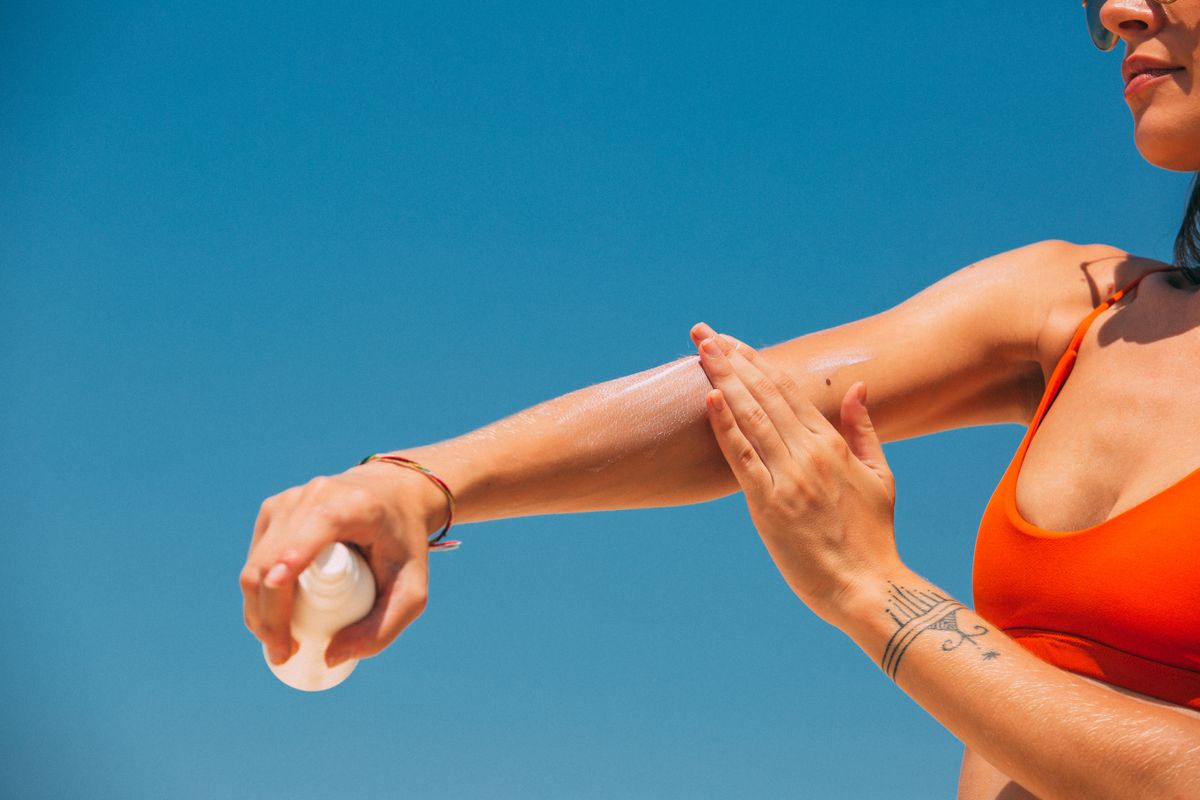
“Reapply every two hours” is the most repeated sentence in sun care, and the least examined. The figure comes from laboratory UV dosing — controlled lamps, measured films, no windows and no makeup — not from a desk job. Read honestly, the rule splits in two: indoors it is insurance against thin coverage, and on water or in sweat it is the difference between the label’s SPF and effectively none.
Where the two-hour figure comes from
SPF testing applies a precise dose of product — two milligrams per square centimeter — to a surface and exposes it to a measured UV dose. The label number describes that fresh, uniform film. Real wear degrades it: rubbing from a collar or a phone, sebum, sweat, and the thin application most people start with all pull effective protection down over time. Published guidance, including the American Academy of Dermatology’s, keeps the two-hour instruction because it sits at the conservative edge of that degradation curve. The clock is a proxy for two things at once — cumulative UV dose and film breakdown — and neither moves at the same speed indoors as it does on a beach.
Indoors, the urgency drops
A day that runs commute, office, commute produces far less UV than the testing scenario assumes. Glass filters the burning UVB out, UVA passes at lower intensity, and the total dose is a fraction of an hour outdoors. Under that ceiling, a strict alarm buys little. What matters more is the morning dose: most people apply well under the tested amount, and published dose-response work puts single-digit protection numbers on a quarter-dose film of an SPF 50. A generous first coat plus a midday top-up on face, neck, and the backs of the hands covers the realistic risk. The two-hour rhythm earns its keep only on days that resemble the lab — outdoor, bright, unbroken.
Over makeup, the honest options
Reapplying a cream over a finished face smears it, so the market offers two compromises, and both share one flaw: dose. SPF powders in compacts are convenient, but a puff transfers a fraction of the benchmark amount — enough to nudge protection, not to restore a label number. Setting sprays with UV filters mist evenly, yet the deposited film is likewise thin, and inhaling atomized filters is a real limit on how much anyone should spray. Treat both as bridges between a proper morning coat and the end of the day, not as the coat itself. A facial mist can feel like a refresh in the same slot, but water alone evaporates and takes nothing with it; the related mechanics are in our guide to facial mists.
The days the rule is not negotiable
Water, sweat, and towels are where the clock matters. Water resistance is a labeled, tested claim — forty or eighty minutes of immersion — not a promise of permanence, and after toweling off the film is gone regardless of the rating. A pool day needs a true re-coat on dried skin, applied visibly, with the two-hour rhythm between swims. Heavy-sweat days behave the same way. Formula choice shapes how willingly anyone re-applies at all, which is where our mineral versus chemical sunscreen comparison becomes practical rather than academic.
The two-hour rule is a lab curve, not a kitchen timer. Indoor days need a good morning dose and one reasonable top-up; pool and sweat days need the full rhythm. The common mistake is inverting the two — alarms at the desk, and nothing after the second swim.
Frequently asked
- Do you really need to reapply sunscreen indoors?
- Usually not on a strict schedule. A window-filtered indoor day delivers a fraction of the UV dose the two-hour rule was built around. A generous morning application plus one midday top-up on face, neck, and hands covers the realistic risk; save the alarm-clock discipline for outdoor days.
- Do SPF powders and sprays work over makeup?
- They work as top-ups, not as replacements. Both deposit a fraction of the two-milligram-per-square-centimeter dose SPF testing uses, so they nudge protection without restoring the label number. Their honest role is bridging a long day between one proper morning application and the end of it.
- What does water-resistant on a sunscreen label actually mean?
- It is a tested claim — the product held its labeled SPF through either forty or eighty minutes of water immersion. It is not permanence. After toweling off, the film is gone regardless of the rating, so pool and sweat days need a true re-coat, not just a clock check.