Body & Bath
Self-tanner explained: DHA, depth, and even fading
How DHA browns the dead outer layer of skin through a Maillard reaction — what sets shade depth, the joint problem, fading rhythm, and why SPF is still required.
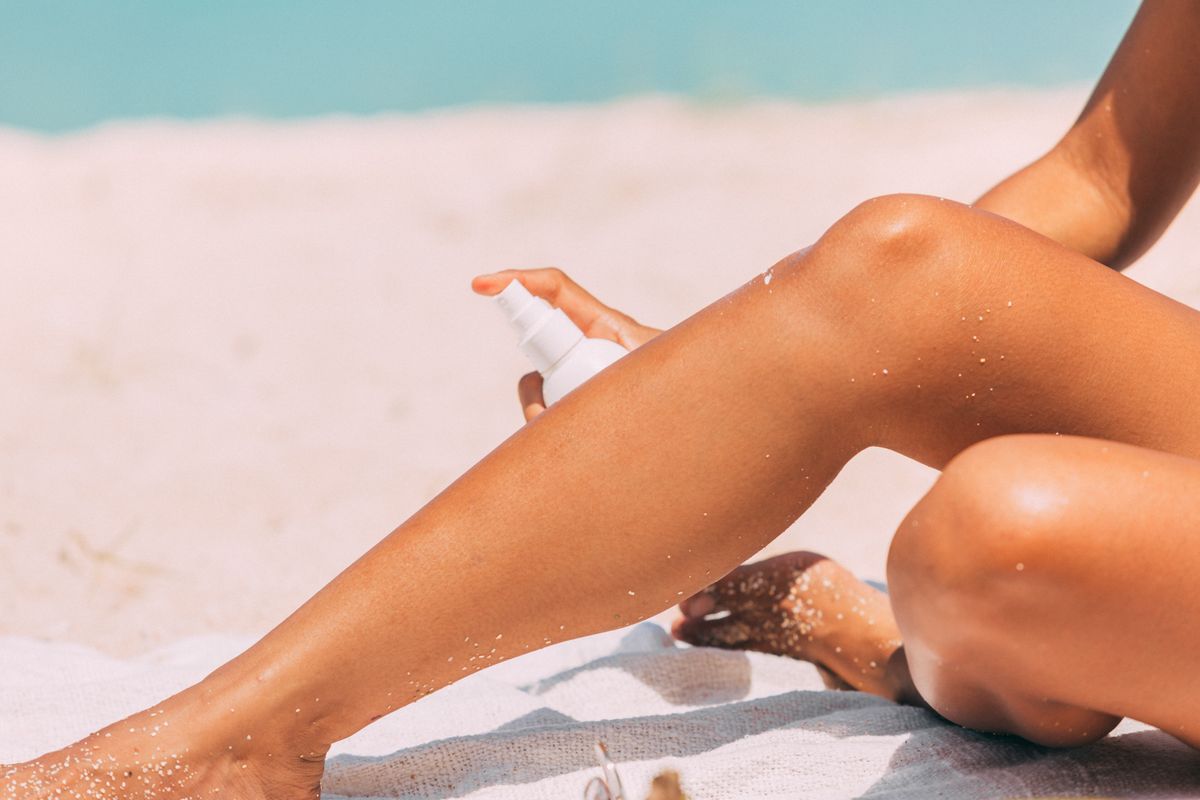
Self-tanner is the only product in the tanning business whose color comes from chemistry rather than injury, and it works on a principle most users never hear: the color is not in your skin — it is on your skin. Understanding that one fact explains the rest, from the week-long fade to the muddy elbows.
The chemistry, and the five-to-seven-day clock
The active ingredient, dihydroxyacetone, is a three-carbon sugar. It reacts with amino acids in the stratum corneum — the layer of dead cells at the surface — in a Maillard reaction, the same browning chemistry that toasts bread. The reaction produces brown compounds called melanoidins, and they sit inside and between dead corneocytes. Two consequences follow. The color develops over several hours because the reaction keeps running after you rinse, which is why guidance always says wait before judging the result. And since dead cells shed in roughly five to seven days, the tan has that exact lifespan no matter what the bottle claims — the color leaves when its host cells do.
Depth is concentration and dwell time
Shade depth has no melanin in it at all; it is arithmetic. More DHA in the formula and more time on the skin means more reaction product in more cell layers, which reads as darker. That is the entire difference between “light” and “deep” on the shelf — the published formulations run roughly 3 percent DHA for subtle to about 5 percent for deep, and rinse-off timing adjusts the result within that band. Going darker than your goal is easy; the reverse requires waiting for the fade.
The joint problem, and how to prevent it
Elbows, knees, and ankles go dark for a structural reason: their stratum corneum is thicker and drier, so the same swipe of DHA meets more dead cells per patch. Prevention happens before application. Moisturize those points first — hydrated skin takes up DHA less greedily — then apply the tanner with fast, light strokes over the joints, sweeping away residue rather than massaging it in. A tanning mitt does the same job for the palms, which otherwise stain as dark as the joints.
Keeping the fade even
Maintenance is a rhythm, not a rescue. Reapply every two to three days to hold depth; a full-face or full-body exfoliation before each application resets the surface so new color lands evenly. One sequencing rule matters: exfoliate before, not right after, because the Maillard reaction continues for hours and scrubbing mid-reaction means patchy color. Daily urea or lactic body lotion between applications slows flaking and keeps the shed even.
The last label to read is the SPF one, and it says nothing: a DHA tan offers a published protection factor of roughly 3 to 4, which is close to none. It is color on dead cells, not melanin in living ones — sunscreen is still a separate product, every day. For the broader texture routine underneath all of this, our body acids guide covers exfoliation choices.
Frequently asked
- How long does a self-tan usually last?
- Five to seven days, because that is roughly the lifespan of the dead skin cells carrying the color. The tint is a reaction product sitting on the stratum corneum, so it sheds when those cells shed — faster where skin turns over quickly, like the face and chest. Daily moisturizing slows visible flaking and keeps the fade more even.
- Does a self-tanner protect me from the sun?
- No, and this is the one claim worth memorizing. The published sun protection factor of a DHA tan is about 3 to 4 at best — negligible against UVB and weaker still against UVA. A tanned-looking self-tanner application is not a tan in the biological sense; it produces no melanin. Sunscreen goes on separately, every time.
- Why did self-tanner turn my elbows and knees dark?
- Those areas have a thicker, drier stratum corneum, so more dead cells and more amino acids sit in the same patch of skin — more reaction, more color. The fix is applied before the tanner: moisturize joints first so the DHA spreads on hydrated skin, and wipe any concentrated residue off with a towel after applying.